
In today’s highly competitive digital landscape, simply having a great product or service is no longer enough to guarantee success. Consumers are constantly bombarded with advertisements, content, and choices, making it harder than ever for brands to stand out.
To cut through the noise, businesses need a structured and strategic approach to guide potential customers from their first interaction with the brand all the way to becoming loyal advocates. This is where the marketing funnel becomes essential.
What is a Marketing Funnel?

A marketing funnel is a strategic model that illustrates the complete journey a potential customer goes through—from the moment they first discover your brand to the point where they make a purchase and even beyond into loyalty and advocacy.
At its core, the marketing funnel helps businesses understand how people move from being strangers to becoming customers, and eventually, brand promoters.
Why is it Called a “Funnel”?
The term “funnel” comes from its shape:
- At the top, a large number of people become aware of your brand.
- As they move through the funnel, only a portion of them show genuine interest.
- An even smaller group seriously considers your product or service.
- Finally, a limited number take action and make a purchase.
This gradual narrowing reflects the reality that not everyone who discovers your brand will become a customer.
The Journey Inside the Funnel
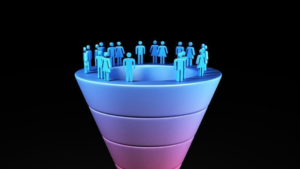
- Discovery
The customer realizes they have a need or problem and encounters your brand for the first time. - Exploration
They begin researching and learning more about possible solutions. - Evaluation
They compare your offering with competitors and assess value, pricing, and trust. - Decision
They are ready to take action and choose whether to buy from you. - Post-Purchase Experience
After buying, their experience determines whether they return or recommend your brand.
A Real-Life Example
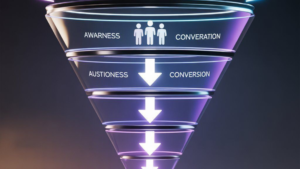
Imagine someone looking to buy a fitness tracker:
- They see a social media post about health tracking (awareness)
- They read blogs and watch videos about fitness devices (interest)
- They compare different brands and features (consideration)
- They choose one and make a purchase (conversion)
- If satisfied, they recommend it to friends (loyalty)
This entire journey—from curiosity to advocacy—is what the marketing funnel captures.
Traditional vs Modern Marketing Funnels
Traditional Funnel
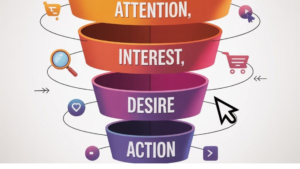
The classic funnel follows the AIDA model:
- Awareness
- Interest
- Desire
- Action
It assumes a linear path, where customers move step-by-step toward purchase.
Modern Funnel

Today’s customer journey is far more complex:
- Customers interact with multiple platforms (social media, websites, email)
- They may enter the funnel at different stages
- They often move back and forth before making a decision
Because of this, modern marketers often view the funnel as:
- A loop instead of a straight line
- A customer journey map with multiple touchpoints
Key Components of a Marketing Funnel
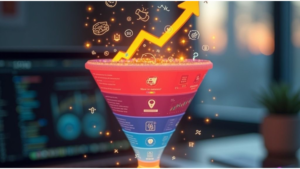
A successful marketing funnel includes:
- Traffic Sources: Where your audience comes from (search engines, ads, social media)
- Lead Capture: Methods to collect customer information (forms, subscriptions)
- Nurturing Systems: Email campaigns, retargeting ads, and content
- Conversion Points: Checkout pages, sign-ups, or bookings
- Retention Strategies: Follow-ups, support, and loyalty programsA digital marketing funnel is a powerful, data-driven framework that helps businesses strategically plan, execute, and optimize their marketing efforts. It is far more than just a theoretical concept—it provides a clear roadmap for understanding customer behavior at every stage of the buying journey.In today’s highly competitive and fast-paced digital environment, businesses need clarity and direction to effectively attract, engage, convert, and retain customers. This is exactly what a digital marketing funnel offers. By breaking down the customer journey into structured stages, companies can deliver the right message to the right audience at the right time.A well-defined digital marketing funnel enables businesses to identify where potential customers are dropping off, measure performance through data analytics, and continuously improve their strategies for better results. It also helps align marketing and sales teams, ensuring a seamless customer experience from the first interaction to long-term loyalty.
- Clear Visualization of the Customer Journey
One of the biggest advantages of a marketing funnel is that it allows businesses to clearly map out the entire customer journey—from the first interaction to post-purchase behavior. Instead of viewing marketing as a series of disconnected activities, the funnel brings everything together into a structured flow.
This visualization helps businesses understand:
How customers discover their brand
What influences their decisions
What steps they take before making a purchase
With this clarity, companies can create more intentional and cohesive strategies rather than relying on guesswork.
- Identifying Drop-Off Points
Not every potential customer completes the journey from awareness to purchase. Many drop off at different stages, and without a funnel, it’s difficult to pinpoint where and why this happens.
A marketing funnel helps businesses:
Track user behavior at each stage
Identify where prospects lose interest
Understand barriers to conversion
For example, a business may notice high website traffic but low sales. This indicates a problem in the consideration or conversion stage. By identifying these gaps, businesses can take targeted actions—such as improving messaging, simplifying checkout, or offering better incentives.
- Improved Messaging at Every Stage
Customers at different stages of the marketing funnel have different needs, questions, and levels of awareness. A one-size-fits-all message is ineffective
The funnel allows businesses to tailor their communication:
Awareness stage: Focus on education and visibility
Interest stage: Provide valuable information and insights
Consideration stage: Highlight benefits and differentiation
Conversion stage: Encourage action with strong offers
Retention stage: Build relationships and loyalty
This targeted approach ensures that marketing messages are relevant and impactful, increasing the chances of engagement and conversion.
- Increased Conversion Rates
A well-optimized marketing funnel directly increases conversion rates by guiding customers step-by-step and removing friction, making it easier for prospects to take action.
Some ways funnels improve conversions include:
Streamlined user experiences
Clear calls-to-action (CTAs)
Personalized content and offers
Timely follow-ups and reminders
Instead of leaving customers to figure things out on their own, the funnel provides a guided path, making the decision-making process smoother and more efficient.
- Better Allocation of Marketing Resources
Without a marketing funnel, businesses risk wasting time and money on unstructured marketing efforts that fail to deliver results. A well-defined marketing funnel helps identify what works, what doesn’t, and enables smarter decision-making for better outcomes.
Businesses can:
Invest more in high-performing channels
Eliminate ineffective strategies
Optimize budget allocation
This leads to improved return on investment (ROI) and more efficient use of resources.
- Stronger Customer Relationships
Modern marketing is not just about acquiring customers—it’s about building long-term relationships. A marketing funnel goes beyond the purchase stage, focusing on retention, loyalty, and long-term customer engagement.
Through strategies like:
Follow-up emails
Loyalty programs
Personalized offers
Customer support
Companies may convert one-time purchasers into loyal consumers and brand evangelists.Loyal customers not only generate more revenue but also promote the brand through word-of-mouth.
- Data-Driven Decision Making
Marketing funnels rely heavily on data and analytics. Every stage provides measurable insights, such as:
Website traffic
Click-through rates
Conversion rates
Customer retention rates
This data helps businesses continuously refine and improve their strategies. Instead of relying on assumptions, decisions are based on real user behavior and performance metrics.
- Consistency and Strategic Direction
Without a marketing funnel, efforts can become disorganized and inconsistent. Different teams may work in silos, and messaging may lack alignment.
A funnel creates:
A unified strategy across marketing and sales
Consistent brand messaging
A clear roadmap for customer engagement
This alignment ensures that every interaction with the customer feels seamless and purposeful.
Common Misconceptions
Many people misunderstand marketing funnels. Here are a few clarifications:
- It’s not only about selling: It’s about building relationships
- It doesn’t end at purchase: Retention is a crucial part
- It’s not always linear: Customers may skip or repeat stages
- It’s not one-size-fits-all: Each business needs a customized funnel
- Awareness (Top of Funnel – TOFU)
This is the first and broadest stage of the digital marketing funnel, where potential customers become aware of your brand for the first time. At this point, they may not even know they need your product—they simply encounter your content while browsing, searching, or scrolling.
Goal: Capture Attention
The primary goal here is to grab attention and create visibility. You are not trying to sell yet—you are introducing your brand and building recognition.
Customer Mindset:
“I just discovered something new.”
“This looks interesting or useful.”
Key Strategies:
- Social Media Content
Platforms like Instagram, LinkedIn, and Facebook help you reach a wide audience. Engaging posts, reels, and short videos can quickly attract attention and encourage sharing.
- Blog Posts
Informative and valuable blog content helps answer common questions and positions your brand as a helpful resource.
- SEO (Search Engine Optimization)
Optimizing your content for search engines ensures your website appears when users search for relevant topics, bringing in organic traffic.
- Paid Ads
Running ads on platforms like Google or social media allows you to target specific audiences and generate quick visibility.
Best Practices:
Focus on education, entertainment, or inspiration
Avoid aggressive selling
Use clear and engaging visuals and headlines
At this stage, your success is measured by reach, impressions, and traffic, not sales.
- Interest (Middle of Funnel – MOFU)
Once people are aware of your brand, some will begin to show interest. They want to learn more and understand whether your offering is relevant to their needs.
Goal: Build Trust and Educate
Here, your job is to nurture curiosity into genuine interest by providing deeper insights and useful information.
Customer Mindset:
“I want to know more about this.”
“Can this help solve my problem?”
Key Strategies:
- Email Newsletters
Collect email addresses and send regular updates, tips, and insights to stay connected with your audience.
- Free Guides or Ebooks
Offering downloadable resources provides value while also generating leads.
- Webinars
Live or recorded sessions allow you to educate your audience and interact directly with them.
- Case Studies
Show real examples of how your product or service has helped others.
Best Practices:
Focus on solving problems
Share actionable insights
Build credibility and authority
At this stage, success is measured by engagement, time spent, and lead generation.
- Consideration
At this stage, potential customers are seriously evaluating their options. They are comparing your brand with competitors and deciding which solution best fits their needs.
Goal: Position Yourself as the Best Choice
You need to clearly communicate why your product or service stands out.
Customer Mindset:
“Is this the right option for me?”
“How does this compare to others?”
Key Strategies:
- Product Demos
Show how your product works and highlight its benefits in real-world scenarios.
- Testimonials and Reviews
Positive feedback from existing customers builds trust and reduces doubt.
- Comparison Pages
Help users compare features, pricing, and benefits transparently.
- Retargeting Ads
Remind users about your brand through targeted ads after they visit your website.
Best Practices:
Highlight unique selling points (USPs)
Address objections and concerns
Provide social proof
This stage is critical because trust and credibility directly impact decision-making.
- Conversion (Bottom of Funnel – BOFU)
This is the stage where prospects turn into customers by taking a specific action—such as making a purchase, signing up, or booking a service.
Goal: Drive Action
Your focus here is to remove friction and encourage immediate action.
Customer Mindset:
“I’m ready to buy.”
“Is this the best deal right now?”
Key Strategies:
- Limited-Time Offers
Create urgency with time-sensitive deals.
- Discounts
Incentivize purchases with special pricing.
- Strong Calls-to-Action (CTAs)
Make use of enticing calls to action (CTAs) such as “Buy Now,” “Get Started,” or “Sign Up Today.”
- Simple Checkout Process
Make the buying process fast, easy, and user-friendly.
Best Practices:
Reduce complexity
Offer guarantees or risk-free trials
Ensure mobile-friendly experience
Success at this stage is measured by conversion rates and sales.
- Retention & Loyalty
Many businesses make the mistake of stopping at conversion—but the funnel doesn’t end there. Retaining customers is often more valuable than acquiring new ones.
Goal: Turn Customers into Repeat Buyers and Advocates
The aim is to build long-term relationships and encourage repeat business.
Customer Mindset:
“Was this a good decision?”
“Should I buy again or recommend this?”
Key Strategies:
- Email Follow-Ups
Send thank-you emails, product tips, and updates to stay connected.
- Loyalty Programs
Reward repeat customers with points, discounts, or exclusive perks.
- Customer Support
Provide excellent service to enhance satisfaction and trust.
- Exclusive Offers
Give special deals to existing customers to encourage repeat purchases.
Best Practices:
Focus on customer experience
Personalize communication
Encourage referrals and reviews
Loyal consumers can act as brand advocates, promoting natural growth.
Why is a Marketing Funnel Important?
A marketing funnel provides structure and clarity to your marketing efforts. It helps businesses:
Understand the customer journey from start to finish
Improve targeting and messaging at each stage
Increase conversion rates by optimizing weak points
Optimize marketing spend by focusing on what works
Without a funnel, marketing can become scattered, leading to wasted time, effort, and budget.
Tips to Build an Effective Marketing Funnel
Creating a high-performing funnel requires strategy, testing, and continuous improvement.
- Know Your Audience
Develop detailed customer personas to understand needs, behaviors, and pain points.
- Use Data
Track user behavior, analyze performance, and optimize each stage based on insights.
- Align Sales and Marketing
Make sure both groups collaborate to provide a flawless client experience.
- Test and Improve
Use A/B testing to refine ads, landing pages, emails, and CTAs for better results.
Understanding the Marketing Funnel
In today’s highly competitive digital landscape, simply having a great product or service is no longer enough to guarantee success. Consumers are constantly bombarded with advertisements, content, and choices, making it harder than ever for brands to stand out.
To cut through the noise, businesses need a structured and strategic approach to guide potential customers from their first interaction with the brand all the way to becoming loyal advocates. This is where the marketing funnel becomes essential.
What is a Marketing Funnel?
A marketing funnel is a strategic model that illustrates the complete journey a potential customer goes through—from the moment they first discover your brand to the point where they make a purchase and even beyond into loyalty and advocacy.
At its core, the marketing funnel helps businesses understand how people move from being strangers to becoming customers, and eventually, brand promoters.
Why is it Called a “Funnel”?
The term “funnel” comes from its shape:
- At the top, a large number of people become aware of your brand.
- As they move through the funnel, only a portion of them show genuine interest.
- An even smaller group seriously considers your product or service.
- Finally, a limited number take action and make a purchase.
This gradual narrowing reflects the reality that not everyone who discovers your brand will become a customer.
The Journey Inside the Funnel
The marketing funnel represents more than just steps—it reflects a decision-making process. Each stage corresponds to a shift in the customer’s mindset:
- Discovery
The customer realizes they have a need or problem and encounters your brand for the first time. - Exploration
They begin researching and learning more about possible solutions. - Evaluation
They compare your offering with competitors and assess value, pricing, and trust. - Decision
They are ready to take action and choose whether to buy from you. - Post-Purchase Experience
After buying, their experience determines whether they return or recommend your brand.
A Real-Life Example
Imagine someone looking to buy a fitness tracker:
- They see a social media post about health tracking (awareness)
- They read blogs and watch videos about fitness devices (interest)
- They compare different brands and features (consideration)
- They choose one and make a purchase (conversion)
- If satisfied, they recommend it to friends (loyalty)
This entire journey—from curiosity to advocacy—is what the marketing funnel captures.
Traditional vs Modern Marketing Funnels
Traditional Funnel
The classic funnel follows the AIDA model:
- Awareness
- Interest
- Desire
- Action
It assumes a linear path, where customers move step-by-step toward purchase.
Modern Funnel
Today’s customer journey is far more complex:
- Customers interact with multiple platforms (social media, websites, email)
- They may enter the funnel at different stages
- They often move back and forth before making a decision
Because of this, modern marketers often view the funnel as:
- A loop instead of a straight line
- A customer journey map with multiple touchpoints
Key Components of a Marketing Funnel
A successful marketing funnel includes:
- Traffic Sources: Where your audience comes from (search engines, ads, social media)
- Lead Capture: Methods to collect customer information (forms, subscriptions)
- Nurturing Systems: Email campaigns, retargeting ads, and content
- Conversion Points: Checkout pages, sign-ups, or bookings
- Retention Strategies: Follow-ups, support, and loyalty programs
Each component plays a role in moving the customer forward.
Why Businesses Rely on Marketing Funnels (Detailed Explanation)
A marketing funnel is much more than a theoretical concept—it is a practical, data-driven framework that helps businesses plan, execute, and optimize their marketing efforts. In today’s competitive and fast-paced digital environment, companies need clarity and direction to effectively attract, convert, and retain customers. This is exactly what a marketing funnel provides.
- Clear Visualization of the Customer Journey
One of the biggest advantages of a marketing funnel is that it allows businesses to clearly map out the entire customer journey—from the first interaction to post-purchase behavior. Instead of viewing marketing as a series of disconnected activities, the funnel brings everything together into a structured flow.
This visualization helps businesses understand:
How customers discover their brand
What influences their decisions
What steps they take before making a purchase
With this clarity, companies can create more intentional and cohesive strategies rather than relying on guesswork.
- Identifying Drop-Off Points
Not every potential customer completes the journey from awareness to purchase. Many drop off at different stages, and without a funnel, it’s difficult to pinpoint where and why this happens.
A marketing funnel helps businesses:
Track user behavior at each stage
Identify where prospects lose interest
Understand barriers to conversion
For example, a business may notice high website traffic but low sales. This indicates a problem in the consideration or conversion stage. By identifying these gaps, businesses can take targeted actions—such as improving messaging, simplifying checkout, or offering better incentives.
- Improved Messaging at Every Stage
Customers at different stages of the funnel have different needs, questions, and levels of awareness. A one-size-fits-all message is ineffective.
The funnel allows businesses to tailor their communication:
Awareness stage: Focus on education and visibility
Interest stage: Provide valuable information and insights
Consideration stage: Highlight benefits and differentiation
Conversion stage: Encourage action with strong offers
Retention stage: Build relationships and loyalty
This targeted approach ensures that marketing messages are relevant and impactful, increasing the chances of engagement and conversion.
- Increased Conversion Rates
A well-optimized marketing funnel directly contributes to higher conversion rates. By guiding customers step-by-step and removing friction along the way, businesses make it easier for prospects to take action.
Some ways funnels improve conversions include:
Streamlined user experiences
Clear calls-to-action (CTAs)
Personalized content and offers
Timely follow-ups and reminders
Instead of leaving customers to figure things out on their own, the funnel provides a guided path, making the decision-making process smoother and more efficient.
- Better Allocation of Marketing Resources
Without a funnel, businesses often waste time and money on scattered marketing efforts that don’t deliver results. A marketing funnel provides insights into what works and what doesn’t, enabling smarter decision-making.
Businesses can:
Invest more in high-performing channels
Eliminate ineffective strategies
Optimize budget allocation
This leads to improved return on investment (ROI) and more efficient use of resources.
- Stronger Customer Relationships
Modern marketing is not just about acquiring customers—it’s about building long-term relationships. A marketing funnel emphasizes engagement beyond the point of purchase, focusing on retention and loyalty.
Through strategies like:
Follow-up emails
Loyalty programs
Personalized offers
Customer support
Companies may convert one-time purchasers into loyal consumers and brand evangelists.Loyal customers not only generate more revenue but also promote the brand through word-of-mouth.
- Data-Driven Decision Making
Marketing funnels rely heavily on data and analytics. Every stage provides measurable insights, such as:
Website traffic
Click-through rates
Conversion rates
Customer retention rates
This data helps businesses continuously refine and improve their strategies. Instead of relying on assumptions, decisions are based on real user behavior and performance metrics.
- Consistency and Strategic Direction
Without a marketing funnel, efforts can become disorganized and inconsistent. Different teams may work in silos, and messaging may lack alignment.
A funnel creates:
A unified strategy across marketing and sales
Consistent brand messaging
A clear roadmap for customer engagement
This alignment ensures that every interaction with the customer feels seamless and purposeful.
Common Misconceptions

Many people misunderstand marketing funnels. Here are a few clarifications:
- It’s not only about selling: It’s about building relationships
- It doesn’t end at purchase: Retention is a crucial part
- It’s not always linear: Customers may skip or repeat stages
- It’s not one-size-fits-all: Each business needs a customized funnel
- Awareness (Top of Funnel – TOFU)
This is the first and broadest stage of the funnel, where potential customers become aware of your brand for the first time. At this point, they may not even know they need your product—they simply encounter your content while browsing, searching, or scrolling.
Goal: Capture Attention
The primary goal here is to grab attention and create visibility. You are not trying to sell yet—you are introducing your brand and building recognition.
Customer Mindset:
“I just discovered something new.”
“This looks interesting or useful.”
Key Strategies:
- Social Media Content
Platforms like Instagram, LinkedIn, and Facebook help you reach a wide audience. Engaging posts, reels, and short videos can quickly attract attention and encourage sharing.
- Blog Posts
Informative and valuable blog content helps answer common questions and positions your brand as a helpful resource.
- SEO (Search Engine Optimization)
Optimizing your content for search engines ensures your website appears when users search for relevant topics, bringing in organic traffic.
- Paid Ads
Running ads on platforms like Google or social media allows you to target specific audiences and generate quick visibility.
Best Practices:
Focus on education, entertainment, or inspiration
Avoid aggressive selling
Use clear and engaging visuals and headlines
At this stage, your success is measured by reach, impressions, and traffic, not sales.
- Interest (Middle of Funnel – MOFU)
Once people are aware of your brand, some will begin to show interest. They want to learn more and understand whether your offering is relevant to their needs.
Goal: Build Trust and Educate
Here, your job is to nurture curiosity into genuine interest by providing deeper insights and useful information.
Customer Mindset:
“I want to know more about this.”
“Can this help solve my problem?”
Key Strategies:
- Email Newsletters
Collect email addresses and send regular updates, tips, and insights to stay connected with your audience.
- Free Guides or Ebooks
Offering downloadable resources provides value while also generating leads.
- Webinars
Live or recorded sessions allow you to educate your audience and interact directly with them.
- Case Studies
Show real examples of how your product or service has helped others.
Best Practices:
Focus on solving problems
Share actionable insights
Build credibility and authority
At this stage, success is measured by engagement, time spent, and lead generation.
- Consideration
At this stage, potential customers are seriously evaluating their options. They are comparing your brand with competitors and deciding which solution best fits their needs.
Goal: Position Yourself as the Best Choice
You need to clearly communicate why your product or service stands out.
Customer Mindset:
“Is this the right option for me?”
“How does this compare to others?”
Key Strategies:
- Product Demos
Show how your product works and highlight its benefits in real-world scenarios.
- Testimonials and Reviews
Positive feedback from existing customers builds trust and reduces doubt.
- Comparison Pages
Help users compare features, pricing, and benefits transparently.
- Retargeting Ads
Remind users about your brand through targeted ads after they visit your website.
Best Practices:
Highlight unique selling points (USPs)
Address objections and concerns
Provide social proof
This stage is critical because trust and credibility directly impact decision-making.
- Conversion (Bottom of Funnel – BOFU)
This is the stage where prospects turn into customers by taking a specific action—such as making a purchase, signing up, or booking a service.
Goal: Drive Action
Your focus here is to remove friction and encourage immediate action.
Customer Mindset:
“I’m ready to buy.”
“Is this the best deal right now?”
Key Strategies:
- Limited-Time Offers
Create urgency with time-sensitive deals.
- Discounts
Incentivize purchases with special pricing.
- Strong Calls-to-Action (CTAs)
Make use of enticing calls to action (CTAs) such as “Buy Now,” “Get Started,” or “Sign Up Today.”
- Simple Checkout Process
Make the buying process fast, easy, and user-friendly.
Best Practices:
Reduce complexity
Offer guarantees or risk-free trials
Ensure mobile-friendly experience
Success at this stage is measured by conversion rates and sales.
- Retention & Loyalty
Many businesses make the mistake of stopping at conversion—but the funnel doesn’t end there. Retaining customers is often more valuable than acquiring new ones.
Goal: Turn Customers into Repeat Buyers and Advocates
The aim is to build long-term relationships and encourage repeat business.
Customer Mindset:
“Was this a good decision?”
“Should I buy again or recommend this?”
Key Strategies:
- Email Follow-Ups
Send thank-you emails, product tips, and updates to stay connected.
- Loyalty Programs
Reward repeat customers with points, discounts, or exclusive perks.
- Customer Support
Provide excellent service to enhance satisfaction and trust.
- Exclusive Offers
Give special deals to existing customers to encourage repeat purchases.
Best Practices:
Focus on customer experience
Personalize communication
Encourage referrals and reviews
Loyal consumers can act as brand advocates, promoting natural growth.
Why is a Marketing Funnel Important?
A marketing funnel provides structure and clarity to your marketing efforts. It helps businesses:
Understand the customer journey from start to finish
Improve targeting and messaging at each stage
Increase conversion rates by optimizing weak points
Optimize marketing spend by focusing on what works
Without a funnel, marketing can become scattered, leading to wasted time, effort, and budget.
Tips to Build an Effective Marketing Funnel
Creating a high-performing funnel requires strategy, testing, and continuous improvement.
- Know Your Audience
Develop detailed customer personas to understand needs, behaviors, and pain points.
- Use Data
Track user behavior, analyze performance, and optimize each stage based on insights.
- Align Sales and Marketing
Make sure both groups collaborate to provide a flawless client experience.
- Test and Improve
Use A/B testing to refine ads, landing pages, emails, and CTAs for better results.
Understanding the Marketing Funnel
In today’s highly competitive digital landscape, simply having a great product or service is no longer enough to guarantee success. Consumers are constantly bombarded with advertisements, content, and choices, making it harder than ever for brands to stand out.
To cut through the noise, businesses need a structured and strategic approach to guide potential customers from their first interaction with the brand all the way to becoming loyal advocates. This is where the digital marketing funnel becomes essential.
What is a Marketing Funnel?
A digital marketing funnel is a strategic model that illustrates the complete journey a potential customer goes through—from the moment they first discover your brand to the point where they make a purchase and even beyond into loyalty and advocacy.
At its core, the digital marketing funnel helps businesses understand how people move from being strangers to becoming customers, and eventually, brand promoters.
Why is it Called a “Funnel”?
The term “funnel” comes from its shape:
- At the top, a large number of people become aware of your brand.
- As they move through the funnel, only a portion of them show genuine interest.
- An even smaller group seriously considers your product or service.
- Finally, a limited number take action and make a purchase.
This gradual narrowing reflects the reality that not everyone who discovers your brand will become a customer.
The Journey Inside the Funnel
The marketing funnel represents more than just steps—it reflects a decision-making process. Each stage corresponds to a shift in the customer’s mindset:
- Discovery
The customer realizes they have a need or problem and encounters your brand for the first time. - Exploration
They begin researching and learning more about possible solutions. - Evaluation
They compare your offering with competitors and assess value, pricing, and trust. - Decision
They are ready to take action and choose whether to buy from you. - Post-Purchase Experience
After buying, their experience determines whether they return or recommend your brand.
A Real-Life Example
Imagine someone looking to buy a fitness tracker:
- They see a social media post about health tracking (awareness)
- They read blogs and watch videos about fitness devices (interest)
- They compare different brands and features (consideration)
- They choose one and make a purchase (conversion)
- If satisfied, they recommend it to friends (loyalty)
This entire journey—from curiosity to advocacy—is what the marketing funnel captures.
Traditional vs Modern Marketing Funnels
Traditional Funnel
The classic funnel follows the AIDA model:
- Awareness
- Interest
- Desire
- Action
It assumes a linear path, where customers move step-by-step toward purchase.
Modern Funnel
Today’s customer journey is far more complex:
- Customers interact with multiple platforms (social media, websites, email)
- They may enter the funnel at different stages
- They often move back and forth before making a decision
Because of this, modern marketers often view the funnel as:
- A loop instead of a straight line
- A customer journey map with multiple touchpoints
Key Components of a Marketing Funnel
A successful marketing funnel includes:
- Traffic Sources: Where your audience comes from (search engines, ads, social media)
- Lead Capture: Methods to collect customer information (forms, subscriptions)
- Nurturing Systems: Email campaigns, retargeting ads, and content
- Conversion Points: Checkout pages, sign-ups, or bookings
- Retention Strategies: Follow-ups, support, and loyalty programs
Each component plays a role in moving the customer forward.
Why Businesses Rely on Marketing Funnels (Detailed Explanation)
A marketing funnel is much more than a theoretical concept—it is a practical, data-driven framework that helps businesses plan, execute, and optimize their marketing efforts. In today’s competitive and fast-paced digital environment, companies need clarity and direction to effectively attract, convert, and retain customers. This is exactly what a marketing funnel provides.
- Clear Visualization of the Customer Journey
One of the biggest advantages of a marketing funnel is that it allows businesses to clearly map out the entire customer journey—from the first interaction to post-purchase behavior. Instead of viewing marketing as a series of disconnected activities, the funnel brings everything together into a structured flow.
This visualization helps businesses understand:
How customers discover their brand
What influences their decisions
What steps they take before making a purchase
With this clarity, companies can create more intentional and cohesive strategies rather than relying on guesswork.
- Identifying Drop-Off Points
Not every potential customer completes the journey from awareness to purchase. Many drop off at different stages, and without a funnel, it’s difficult to pinpoint where and why this happens.
A marketing funnel helps businesses:
Track user behavior at each stage
Identify where prospects lose interest
Understand barriers to conversion
For example, a business may notice high website traffic but low sales. This indicates a problem in the consideration or conversion stage. By identifying these gaps, businesses can take targeted actions—such as improving messaging, simplifying checkout, or offering better incentives.
- Improved Messaging at Every Stage
Customers at different stages of the funnel have different needs, questions, and levels of awareness. A one-size-fits-all message is ineffective.
The funnel allows businesses to tailor their communication:
Awareness stage: Focus on education and visibility
Interest stage: Provide valuable information and insights
Consideration stage: Highlight benefits and differentiation
Conversion stage: Encourage action with strong offers
Retention stage: Build relationships and loyalty
This targeted approach ensures that marketing messages are relevant and impactful, increasing the chances of engagement and conversion.
- Increased Conversion Rates
A well-optimized marketing funnel directly contributes to higher conversion rates. By guiding customers step-by-step and removing friction along the way, businesses make it easier for prospects to take action.
Some ways funnels improve conversions include:
Streamlined user experiences
Clear calls-to-action (CTAs)
Personalized content and offers
Timely follow-ups and reminders
Instead of leaving customers to figure things out on their own, the funnel provides a guided path, making the decision-making process smoother and more efficient.
- Better Allocation of Marketing Resources
Without a funnel, businesses often waste time and money on scattered marketing efforts that don’t deliver results. A marketing funnel provides insights into what works and what doesn’t, enabling smarter decision-making.
Businesses can:
Invest more in high-performing channels
Eliminate ineffective strategies
Optimize budget allocation
This leads to improved return on investment (ROI) and more efficient use of resources.
- Stronger Customer Relationships
Modern marketing is not just about acquiring customers—it’s about building long-term relationships. A marketing funnel emphasizes engagement beyond the point of purchase, focusing on retention and loyalty.
Through strategies like:
Follow-up emails
Loyalty programs
Personalized offers
Customer support
Companies may convert one-time purchasers into loyal consumers and brand evangelists.Loyal customers not only generate more revenue but also promote the brand through word-of-mouth.
- Data-Driven Decision Making
Marketing funnels rely heavily on data and analytics. Every stage provides measurable insights, such as:
Website traffic
Click-through rates
Conversion rates
Customer retention rates
This data helps businesses continuously refine and improve their strategies. Instead of relying on assumptions, decisions are based on real user behavior and performance metrics.
- Consistency and Strategic Direction
Without a marketing funnel, efforts can become disorganized and inconsistent. Different teams may work in silos, and messaging may lack alignment.
A funnel creates:
A unified strategy across marketing and sales
Consistent brand messaging
A clear roadmap for customer engagement
This alignment ensures that every interaction with the customer feels seamless and purposeful.
Common Misconceptions
Many people misunderstand marketing funnels. Here are a few clarifications:
- It’s not only about selling: It’s about building relationships
- It doesn’t end at purchase: Retention is a crucial part
- It’s not always linear: Customers may skip or repeat stages
- It’s not one-size-fits-all: Each business needs a customized funnel
- Awareness (Top of Funnel – TOFU)
This is the first and broadest stage of the funnel, where potential customers become aware of your brand for the first time. At this point, they may not even know they need your product—they simply encounter your content while browsing, searching, or scrolling.
Goal: Capture Attention
The primary goal here is to grab attention and create visibility. You are not trying to sell yet—you are introducing your brand and building recognition.
Customer Mindset:
“I just discovered something new.”
“This looks interesting or useful.”
Key Strategies:
- Social Media Content
Platforms like Instagram, LinkedIn, and Facebook help you reach a wide audience. Engaging posts, reels, and short videos can quickly attract attention and encourage sharing.
- Blog Posts
Informative and valuable blog content helps answer common questions and positions your brand as a helpful resource.
- SEO (Search Engine Optimization)
Optimizing your content for search engines ensures your website appears when users search for relevant topics, bringing in organic traffic.
- Paid Ads
Running ads on platforms like Google or social media allows you to target specific audiences and generate quick visibility.
Best Practices:
Focus on education, entertainment, or inspiration
Avoid aggressive selling
Use clear and engaging visuals and headlines
At this stage, your success is measured by reach, impressions, and traffic, not sales.
- Interest (Middle of Funnel – MOFU)
Once people are aware of your brand, some will begin to show interest. They want to learn more and understand whether your offering is relevant to their needs.
Goal: Build Trust and Educate
Here, your job is to nurture curiosity into genuine interest by providing deeper insights and useful information.
Customer Mindset:
“I want to know more about this.”
“Can this help solve my problem?”
Key Strategies:
- Email Newsletters
Collect email addresses and send regular updates, tips, and insights to stay connected with your audience.
- Free Guides or Ebooks
Offering downloadable resources provides value while also generating leads.
- Webinars
Live or recorded sessions allow you to educate your audience and interact directly with them.
- Case Studies
Show real examples of how your product or service has helped others.
Best Practices:
Focus on solving problems
Share actionable insights
Build credibility and authority
At this stage, success is measured by engagement, time spent, and lead generation.
- Consideration
At this stage, potential customers are seriously evaluating their options. They are comparing your brand with competitors and deciding which solution best fits their needs.
Goal: Position Yourself as the Best Choice
You need to clearly communicate why your product or service stands out.
Customer Mindset:
“Is this the right option for me?”
“How does this compare to others?”
Key Strategies:
- Product Demos
Show how your product works and highlight its benefits in real-world scenarios.
- Testimonials and Reviews
Positive feedback from existing customers builds trust and reduces doubt.
- Comparison Pages
Help users compare features, pricing, and benefits transparently.
- Retargeting Ads
Remind users about your brand through targeted ads after they visit your website.
Best Practices:
Highlight unique selling points (USPs)
Address objections and concerns
Provide social proof
This stage is critical because trust and credibility directly impact decision-making.
- Conversion (Bottom of Funnel – BOFU)
This is the stage where prospects turn into customers by taking a specific action—such as making a purchase, signing up, or booking a service.
Goal: Drive Action
Your focus here is to remove friction and encourage immediate action.
Customer Mindset:
“I’m ready to buy.”
“Is this the best deal right now?”
Key Strategies:
- Limited-Time Offers
Create urgency with time-sensitive deals.
- Discounts
Incentivize purchases with special pricing.
- Strong Calls-to-Action (CTAs)
Make use of enticing calls to action (CTAs) such as “Buy Now,” “Get Started,” or “Sign Up Today.”
- Simple Checkout Process
Make the buying process fast, easy, and user-friendly.
Best Practices:
Reduce complexity
Offer guarantees or risk-free trials
Ensure mobile-friendly experience
Success at this stage is measured by conversion rates and sales.
- Retention & Loyalty
Many businesses make the mistake of stopping at conversion—but the funnel doesn’t end there. Retaining customers is often more valuable than acquiring new ones.
Goal: Turn Customers into Repeat Buyers and Advocates
The aim is to build long-term relationships and encourage repeat business.
Customer Mindset:
“Was this a good decision?”
“Should I buy again or recommend this?”
Key Strategies:
- Email Follow-Ups
Send thank-you emails, product tips, and updates to stay connected.
- Loyalty Programs
Reward repeat customers with points, discounts, or exclusive perks.
- Customer Support
Provide excellent service to enhance satisfaction and trust.
- Exclusive Offers
Give special deals to existing customers to encourage repeat purchases.
Best Practices:
Focus on customer experience
Personalize communication
Encourage referrals and reviews
Loyal consumers can act as brand advocates, promoting natural growth.
Why is a Marketing Funnel Important?
A marketing funnel provides structure and clarity to your marketing efforts. It helps businesses:
Understand the customer journey from start to finish
Improve targeting and messaging at each stage
Increase conversion rates by optimizing weak points
Optimize marketing spend by focusing on what works
Without a funnel, marketing can become scattered, leading to wasted time, effort, and budget.
Tips to Build an Effective Marketing Funnel
Creating a high-performing funnel requires strategy, testing, and continuous improvement.
- Know Your Audience
Develop detailed customer personas to understand needs, behaviors, and pain points.
- Use Data
Track user behavior, analyze performance, and optimize each stage based on insights.
- Align Sales and Marketing
Make sure both groups collaborate to provide a flawless client experience.
- Test and Improve
Use A/B testing to refine ads, landing pages, emails, and CTAs for better results.
Conclusion
The digital marketing funnel is a vital tool for understanding how customers move from discovering a brand to becoming loyal advocates. By breaking the journey into clear stages—awareness, interest, consideration, conversion, and retention—businesses can create more targeted and effective marketing strategies.
Rather than focusing only on sales, a well-structured digital marketing funnel emphasizes building trust, delivering value, and nurturing relationships at every step. It also helps identify gaps where potential customers may drop off, allowing for continuous improvement.
In today’s dynamic digital environment, the digital marketing funnel is no longer strictly linear. Customers interact across multiple channels and may move back and forth between stages, making the journey more complex than ever.
Ultimately, a strong digital marketing funnel leads to better customer experiences, higher conversions, and long-term business growth.
Aouther : amal